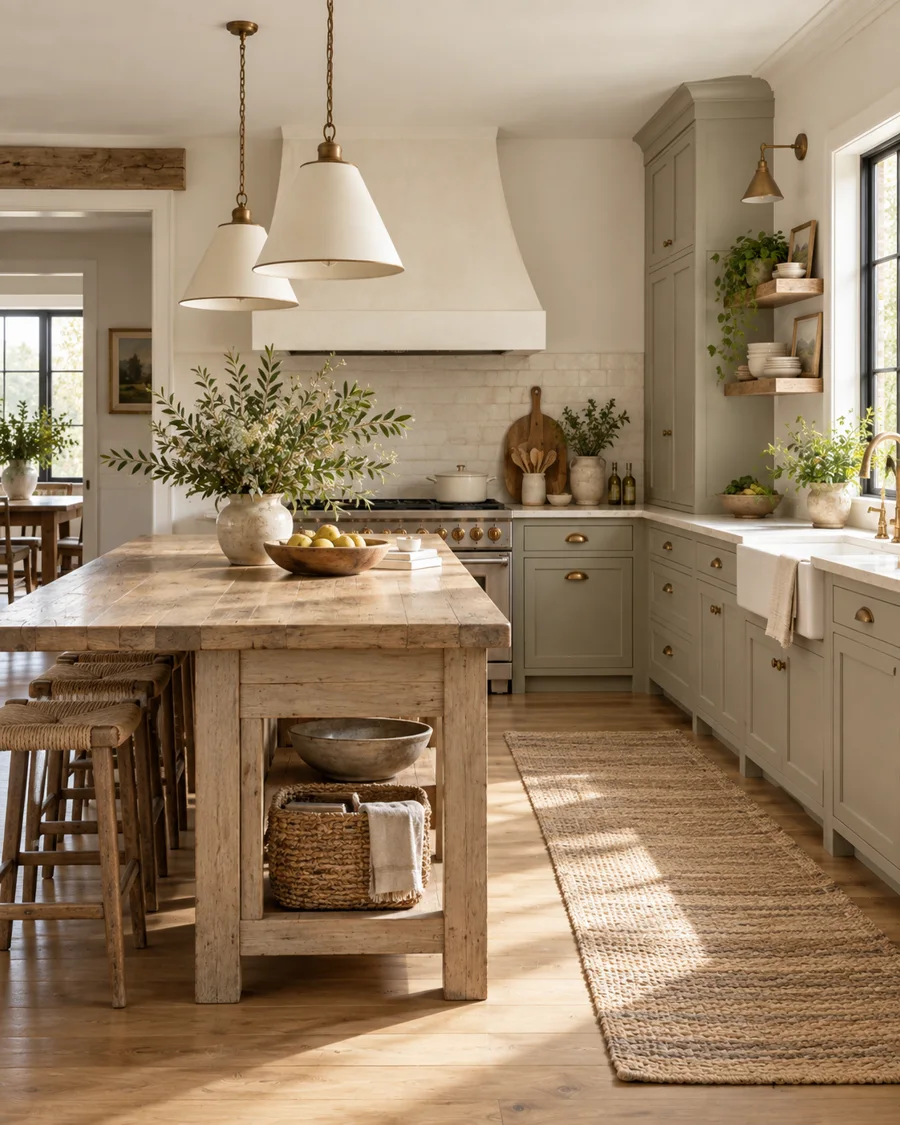
Begin With Cabinetry That Can Age Gracefully
Shaker and simple framed doors suit farmhouse kitchens because their construction is legible without being ornate. Painted finishes in warm white, cream, muted green, blue-grey or deeper earthy tones can all work, as can natural timber. The important quality is that the cabinetry does not depend on a perfect high-gloss surface to look good. Small signs of use should feel compatible with the room. Artificial distressing, however, is rarely necessary; genuine material variation and normal wear create more believable character over time.
Use the Island Like a Worktable
A farmhouse island often feels better when it reads as furniture rather than a monolithic block. Visible legs, a contrasting timber top, open ends or a different paint color can separate it from the perimeter cabinetry. This is also a useful way to introduce character without committing the entire kitchen to a strong style. In smaller rooms, a real table or compact butcher-block cart may provide enough preparation and gathering space while keeping the floor visually lighter.
Let the Sink Area Carry Some Character
Apron-front sinks are strongly associated with farmhouse kitchens, but they are not mandatory. A simple undermount sink with a substantial faucet can work just as well if the cabinetry, worktop and surrounding details carry the style. If you do choose a ceramic farmhouse sink, consider its weight, cabinet requirements and the visibility of chips or marks over time. The area around the sink is used heavily, so practicality should remain more important than the photograph.
Choose Surfaces With Natural Variation
Stone, timber, handmade-look tile and softly textured ceramics bring depth to a farmhouse kitchen because slight variation makes the room feel less manufactured. This does not mean every surface should be rustic. A durable quartz worktop can sit beside a handmade tile backsplash; a clean stone floor can balance timber cabinetry. The room feels more convincing when polished and imperfect surfaces are allowed to coexist instead of every element being deliberately aged.
Make Open Storage Earn Its Place
Plate racks, rails, shelves and glass-front cabinets can support the practical, collected quality of farmhouse design, especially for objects used every day. But open storage should reduce friction, not simply create a display burden. Keep the most frequently reached bowls, mugs, pans or utensils accessible and place less attractive supplies behind closed doors. A shelf with breathing room feels more domestic and useful than a wall packed with decorative objects.
Mix Old and New Without Hiding the Modern Parts
A farmhouse kitchen does not become more authentic by disguising every modern appliance. Stainless steel, induction and contemporary ventilation can coexist with painted cabinetry and timber when their placement is calm and the surrounding palette is coherent. Trying to make new technology look artificially old often produces a themed result. A better strategy is to let the architecture and tactile materials carry the sense of history while the equipment remains straightforward.
Finish With Textiles and Everyday Objects
Linen, woven runners, timber boards, ceramic crocks and baskets can soften the room, but the best accessories are usually things that perform a real job. A farmhouse kitchen feels believable when its warmth comes from use: a table that can take wear, hooks that hold aprons, a bowl that actually contains fruit. This keeps the design from drifting into staged nostalgia and allows the room to evolve naturally.

