Introduce a Pointed Arch in One Deliberate Place
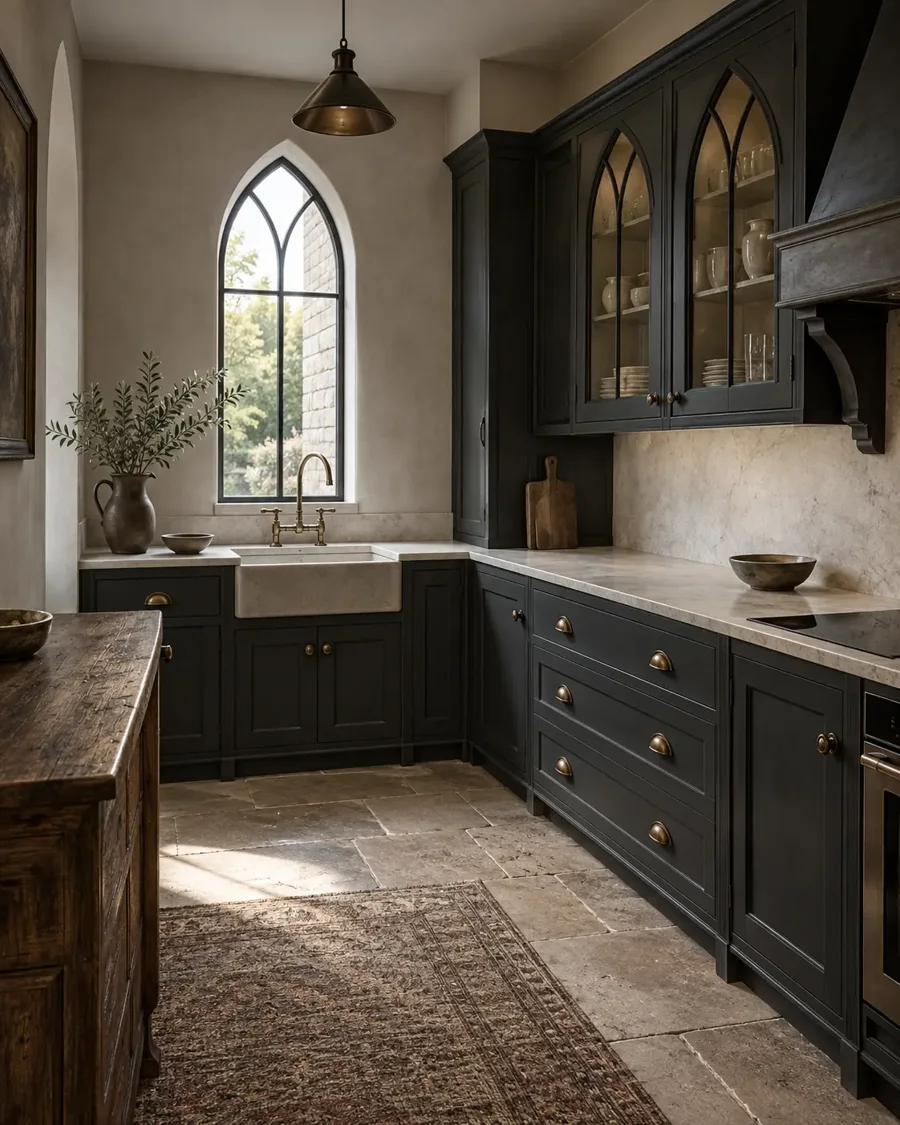
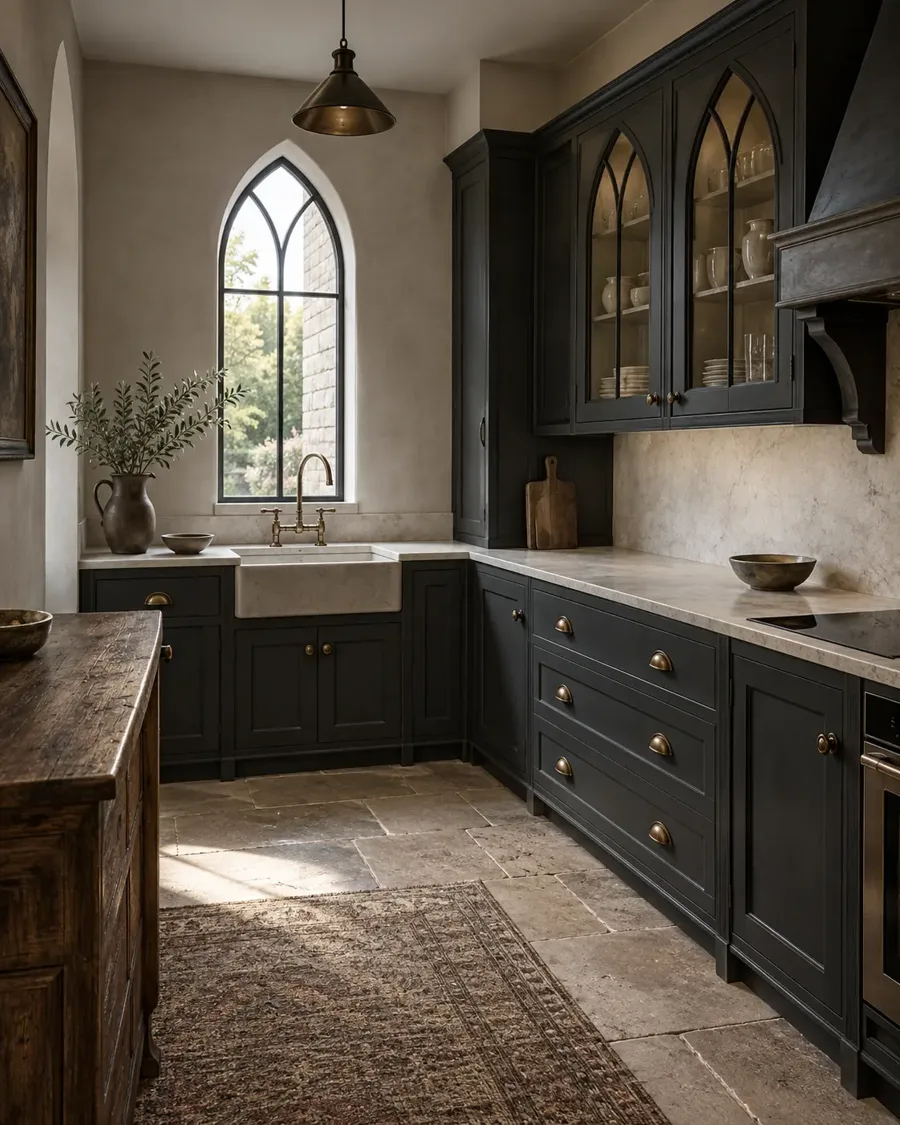
A pointed arch can introduce the strongest Gothic reference without requiring every object to be decorative. The concept image places the motif in upper cupboard glazing and the window. In an existing kitchen, a furniture-scale detail may be the more achievable route: a glazed cabinet, a freestanding cupboard or a selected panel treatment. Keep the surrounding fronts simpler so the shape remains readable. Do not assume that an architectural opening shown in a visualization can be reproduced in a real building without a suitable design. The transferable idea is the relationship between the pointed form and its quieter background.
Build Depth With More Than One Dark Finish
A dark scheme becomes more interesting when the surfaces do not all reflect light in the same way. The photographed contemporary kitchen shows dark cabinetry beside glazing and a lighter wall surface. Borrow that separation of layers, then combine it with the Gothic details that suit your own room. A deep painted front, a visible wood grain and a small metal fitting can each read differently without introducing another strong color. Compare the finishes after dark as well as in daylight. If all the cabinet edges disappear, the room may need a lighter neighboring surface or better illumination.


Use Carved Furniture as a Focus
An elaborate cabinet can supply enough decorative detail for an otherwise restrained kitchen or dining area. This monochrome photograph makes the carving and openings easy to see, but it does not establish the piece's date, original color or style. Use it as a reference for the relationship between a detailed frame and the objects inside. Place a characterful cupboard where it can serve a useful purpose and remain away from the busiest splash area. If the cabinet is already expressive, keep the display modest and let neighboring furniture have quieter lines.

Balance Heavy Texture With a Clear Working Surface
Stone-like texture and substantial timber can give a deep-colored scheme more material presence. This interior shows those textures at a strong scale. You can use the relationship more selectively: a wood furniture piece beside quieter cabinets, or one textured wall beyond the main splash area. Avoid treating roughness as the goal in itself. A working kitchen still needs surfaces that suit preparation, washing and routine cleaning. Check the finish and care requirements of the actual material rather than relying on its appearance in a photograph. A clear counter also helps the heavier textures remain visible.
Choose Metal Lighting With a Legible Shape
Metalwork can reinforce the room's atmosphere through a clear silhouette and a finish that relates to the cabinetry. The simple pendant in this rustic kitchen shows how a dark fitting can sit comfortably among substantial materials. For a Gothic-inspired scheme, you might choose a similarly restrained shade or a more linear lantern form, provided its scale suits the room. Avoid relying on decorative lighting alone. Preparation and washing areas need useful light of their own, and the fitting should remain comfortable to look at from nearby seating.


Keep the Atmosphere Bright Enough to Use
A dramatic kitchen should still reveal the material choices you made. This photograph shows light drawing attention to a tiled niche above dark cabinetry. The rounded arch is not the pointed motif used in the concept image; the useful lesson here is how illumination makes a textured surface visible. Decide which parts of your kitchen need practical task light and which can remain more subdued. Keep a usable preparation surface clear of display objects. Then review the room at the time of day you normally cook, when a moody inspiration photograph may otherwise hide the compromises.


