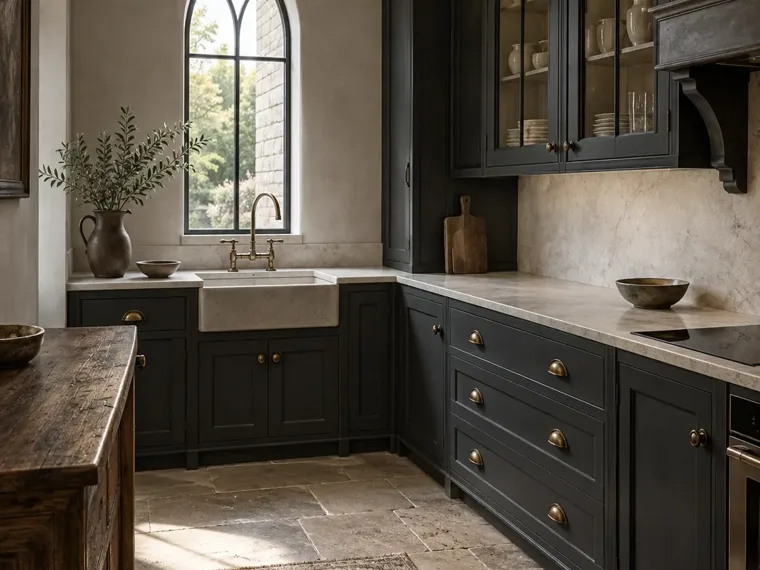
Give Pantry Storage Its Own Place
A pantry can be a distinct cupboard or a small group of shelves rather than an additional room. This photographed scene combines open storage, enclosed compartments and containers of different sizes. Borrow the organization of a dedicated storage area at a scale that suits your kitchen. Frequently used ingredients should be accessible, while heavier or awkward items need a position that makes them easy to lift. You do not need antique containers to create the effect. Choose suitable food storage for daily use and keep purely decorative older vessels separate from that function.

Make a Wooden Table the Working Center
A worktable can give a kitchen a furniture-based center and a place to set out dishes or prepare for a meal. This image is a contemporary reference for the relationship between a substantial table and fitted cabinets, rather than evidence of a Victorian room. Choose the height and surface for the task you want it to perform. A dining table is comfortable for sitting but may be too low for sustained standing preparation. In a small kitchen, a narrower table at one side can provide useful flexibility without blocking the central route.


Let a Dresser Carry the Decorative Detail
A dresser or display cupboard can carry the room's more elaborate detail while the working cabinets stay simpler. The monochrome photograph highlights carving, shaped openings and tableware within a single furniture piece. It does not verify a Victorian date or original finish. Use the composition as a starting point for deciding how much detail your room can accommodate. Keep the storage useful, and avoid placing delicate pieces where opening a cupboard or reaching for a cup becomes awkward. A small, clearly arranged display often makes the cabinet's shape easier to appreciate.
Use Pattern as a Contemporary Interpretation
Patterned tile can bring a decorative layer into a period-inspired scheme, but the pattern itself should not be assumed to be historically accurate. This contemporary kitchen provides a useful example of a richly patterned surface paired with simpler cabinet fronts. Choose the area where the pattern will live, then compare it with the floor and any visible textiles. If the room already contains a detailed dresser, a smaller patterned section may be enough. Check the proposed tile layout at corners and edges before ordering, and select a surface appropriate to its working location.

Display Kitchenware With a Useful Rhythm
A small collection of kitchenware can add character while expressing how the room is used. This display of hanging pieces and utensils provides a reference for grouping objects by shape and purpose. In your own kitchen, start with the items you reach for and place them where they will remain accessible without crowding the preparation area. Keep heavier pieces on suitable fixings and avoid storing delicate objects above a busy route. Older containers or utensils can remain decorative when their condition or intended use is uncertain. A coherent group does not have to be large.

Keep the Modern Room Comfortable and Light
A period-inspired kitchen still needs to suit the people who use it now. This contemporary example shows how a light window area and a simple textile can soften a room without adding more ornament. Apply the principle to your own layout: keep daylight useful, allow space for comfortable meals and choose fabric that can be maintained in its location. Existing architectural features may be worth retaining, but the best arrangement for cooking and storage should come from the actual room. Avoid copying a historical-looking layout if it makes everyday movement difficult.