Choose the White by Undertone, Not by Name
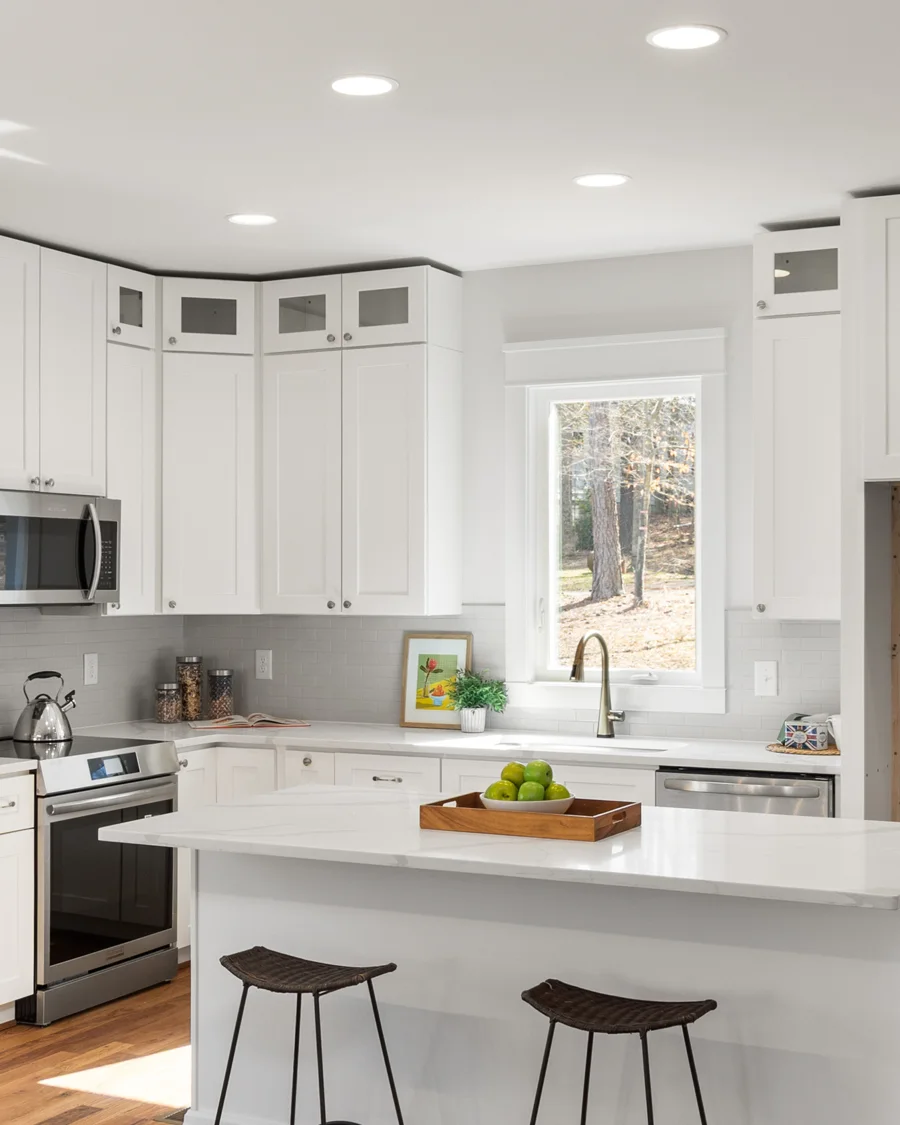
Whites shift dramatically depending on daylight, artificial light and the materials around them. A cool white beside creamy stone can make the stone look yellow; a warm white next to a blue-grey floor can appear unexpectedly beige. Instead of choosing cabinet paint in isolation, compare samples with the worktop, splashback, flooring and the room's actual daylight. North-facing rooms often benefit from slightly warmer whites, while very warm southern light can tolerate cooler tones. The goal is not to find a universally 'perfect white' but to make the surfaces agree with one another.
Add Character with Classic Paneled Doors
White cabinetry can carry a traditional look through its door profile rather than through extra color. The raised panels and molded edges in this kitchen create small shadows, while the ornate central panel gives the composition a more decorative character. For a quieter version, choose a simple Shaker-style frame with a flat center and reduce the surrounding ornament. For a formal room, more detailed moldings can work when their proportions relate to the doors and trim nearby. Treat the hardware as part of the composition, and remember that deeper profiles create more edges to wipe down.

Use White to Reduce the Weight of Cabinetry
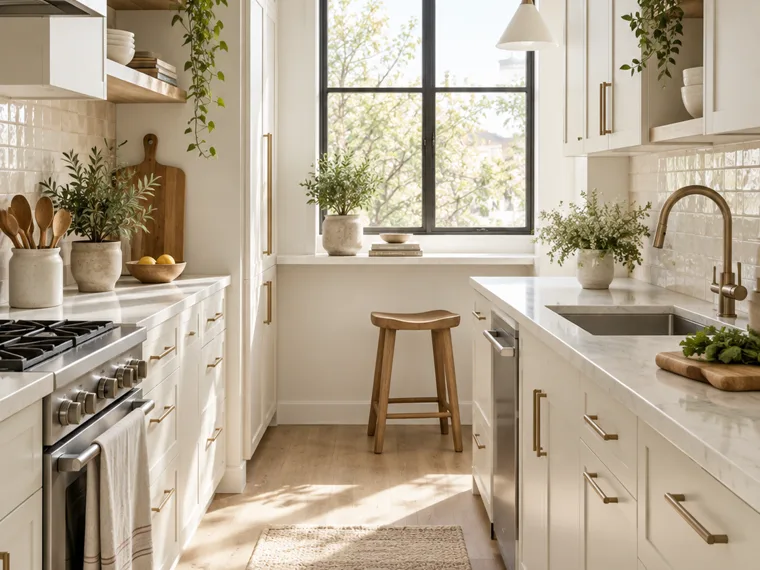
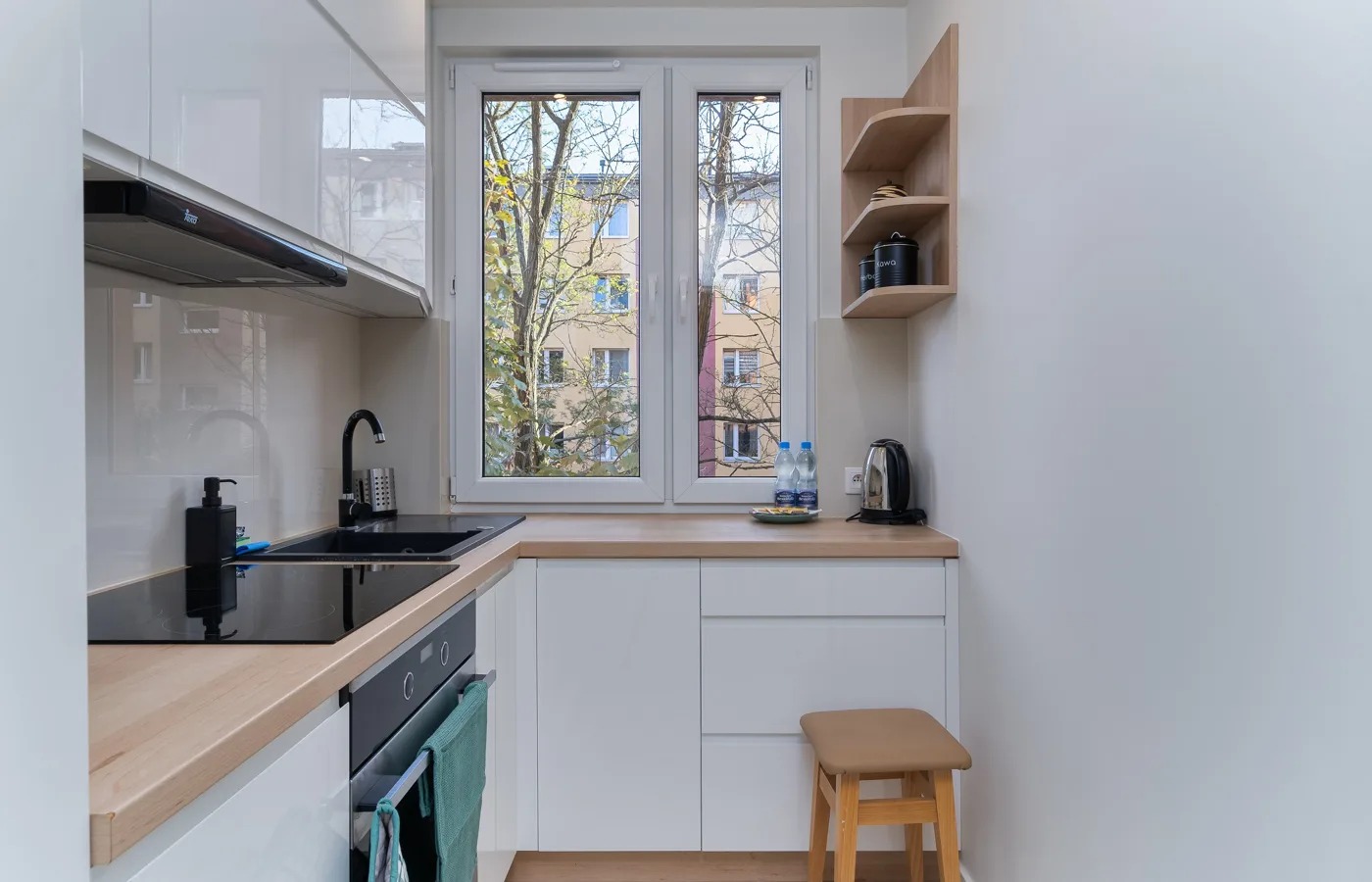
Pale cabinetry reflects more light than dark cabinetry and usually reads as less visually massive, which is why white kitchens can be effective in compact or narrow rooms. The effect is strongest when tall units are kept coherent and cabinet lines are not constantly interrupted by contrasting trims. However, white does not literally create floor area. A crowded layout remains crowded. Think of white as a way to soften the visual presence of necessary storage rather than as a substitute for good clearances.
Layer Several Pale Materials
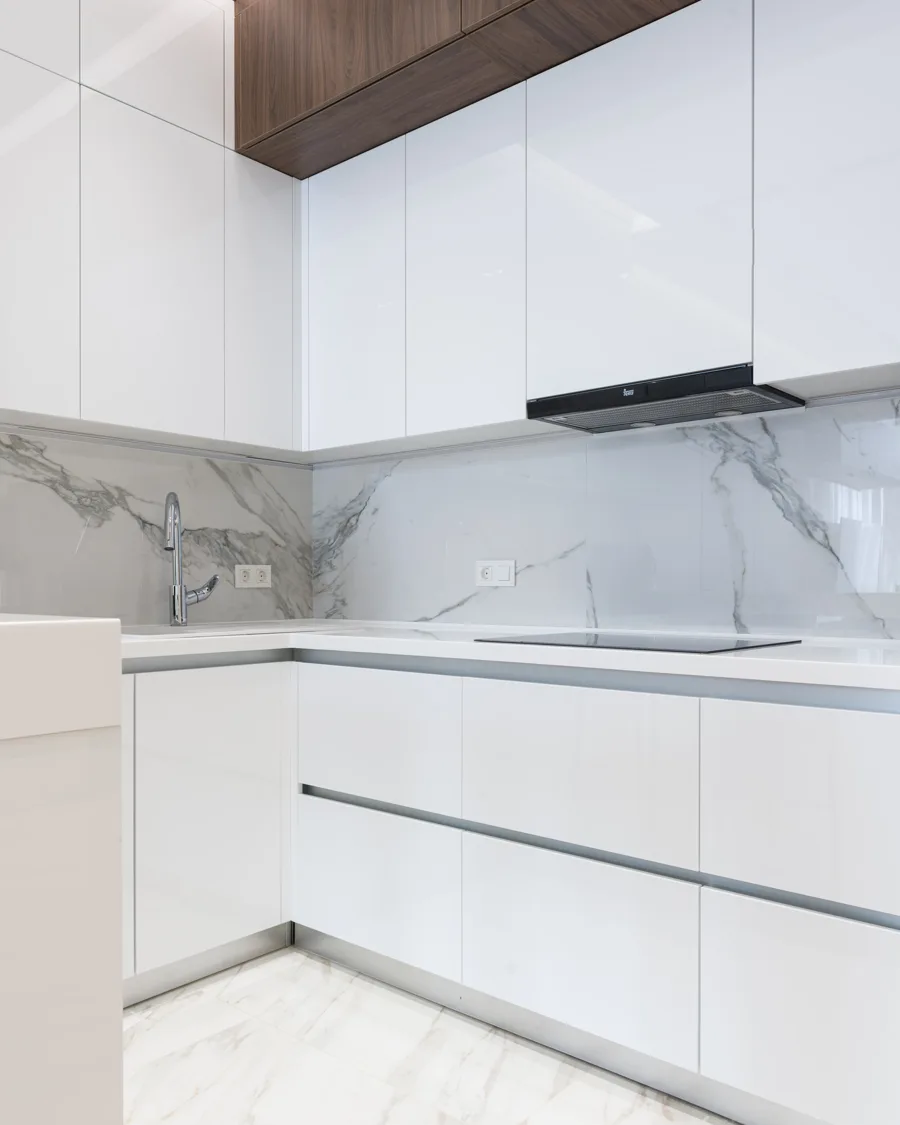
An all-white kitchen becomes richer when 'white' is treated as a family rather than a single paint chip. Warm painted cabinetry, pale veined stone, handmade off-white tile and light oak can all sit within the same bright composition while contributing different textures and levels of reflection. This layered approach also makes the room more forgiving because slight color variation looks intentional. A perfectly matched white cabinet, white quartz, white tile and white wall can flatten into one featureless field under even lighting.
Shop this direction
Four pieces that reinforce the pale, tactile palette without trying to copy the editorial image literally.
Adrien 26-Inch Counter Stool Set
Maven Lane
Weathered oak and a light upholstered seat add warmth at counter height while keeping the overall value of the room pale.
Augustine Rattan Dome Pendant Light
Nathan James
Natural rattan adds texture overhead, helping a white kitchen feel layered without introducing a heavy color block.
Italian Travertine Tray 12 x 6
Koville
Real light-beige travertine brings subtle tonal variation and a natural stone surface to an otherwise clean countertop.
Distressed White Ceramic Vase Set
Sullivans
The distressed white ceramic finish introduces shape and surface variation while staying inside a restrained pale palette.
Introduce Wood Where the Room Needs Warmth
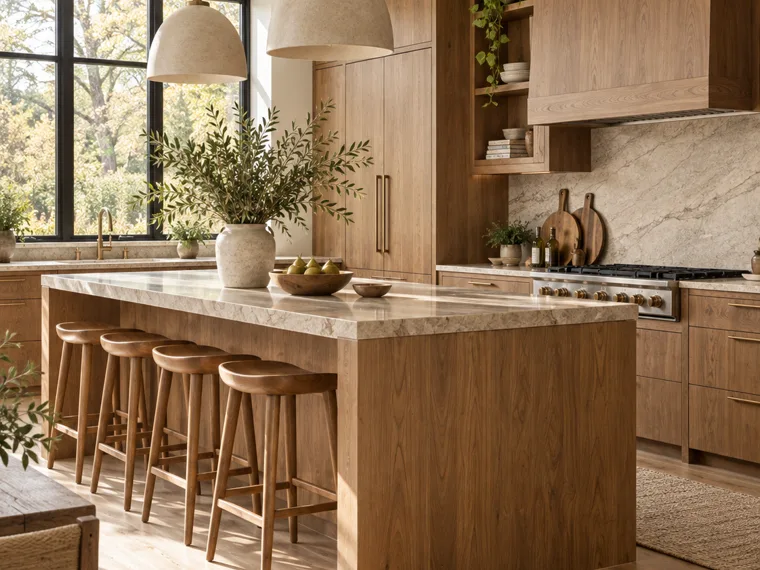
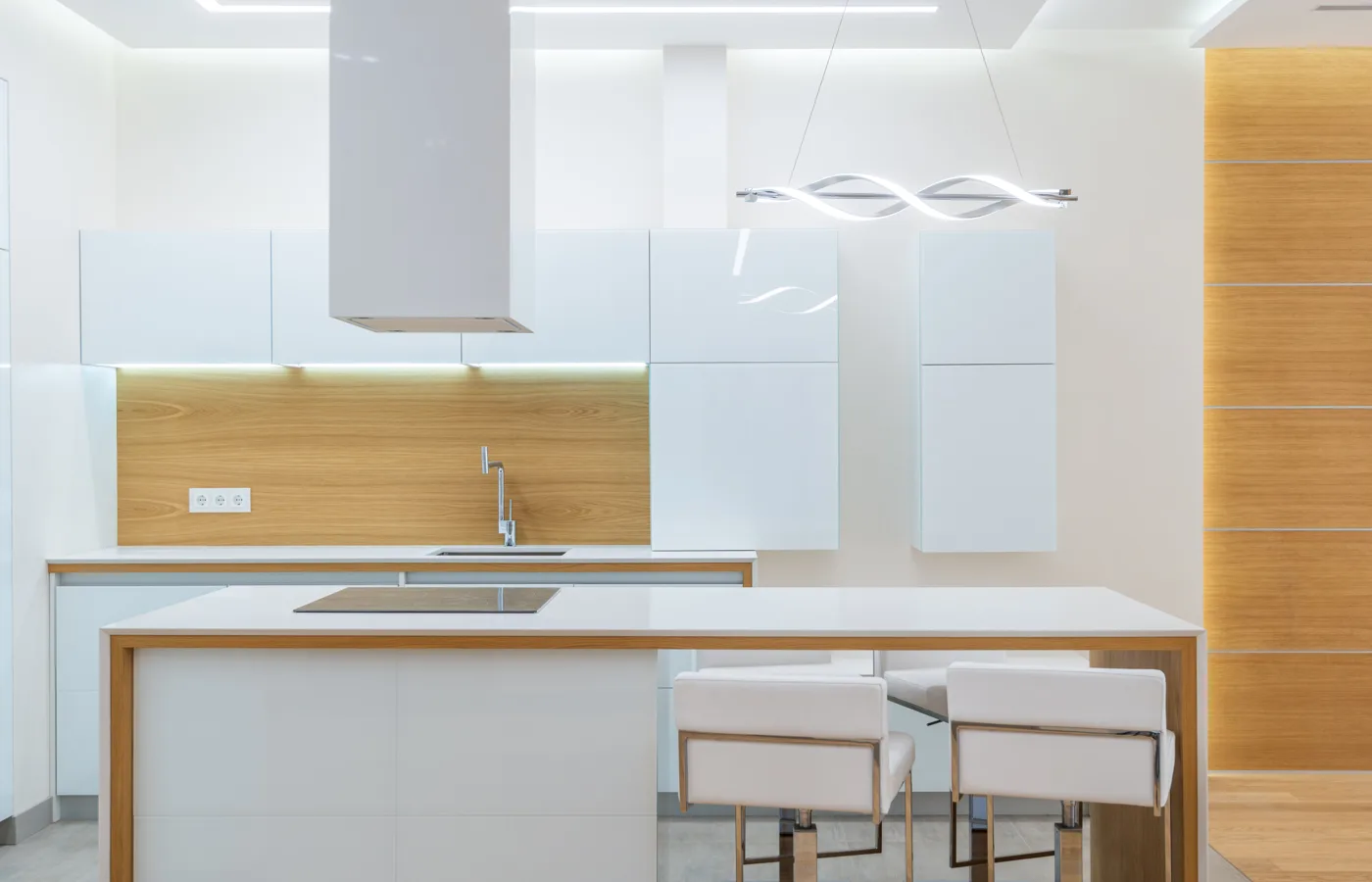
Timber is one of the easiest ways to stop a white kitchen from feeling sterile. It can appear as flooring, stools, an island, shelving or just one substantial furniture piece. Pale oak keeps the overall room airy, while walnut or darker stained wood creates a stronger focal point. The most effective use is usually structural rather than decorative: a timber island or floor has more impact than adding many small wooden accessories after the room is finished.
Decide Where You Want Contrast
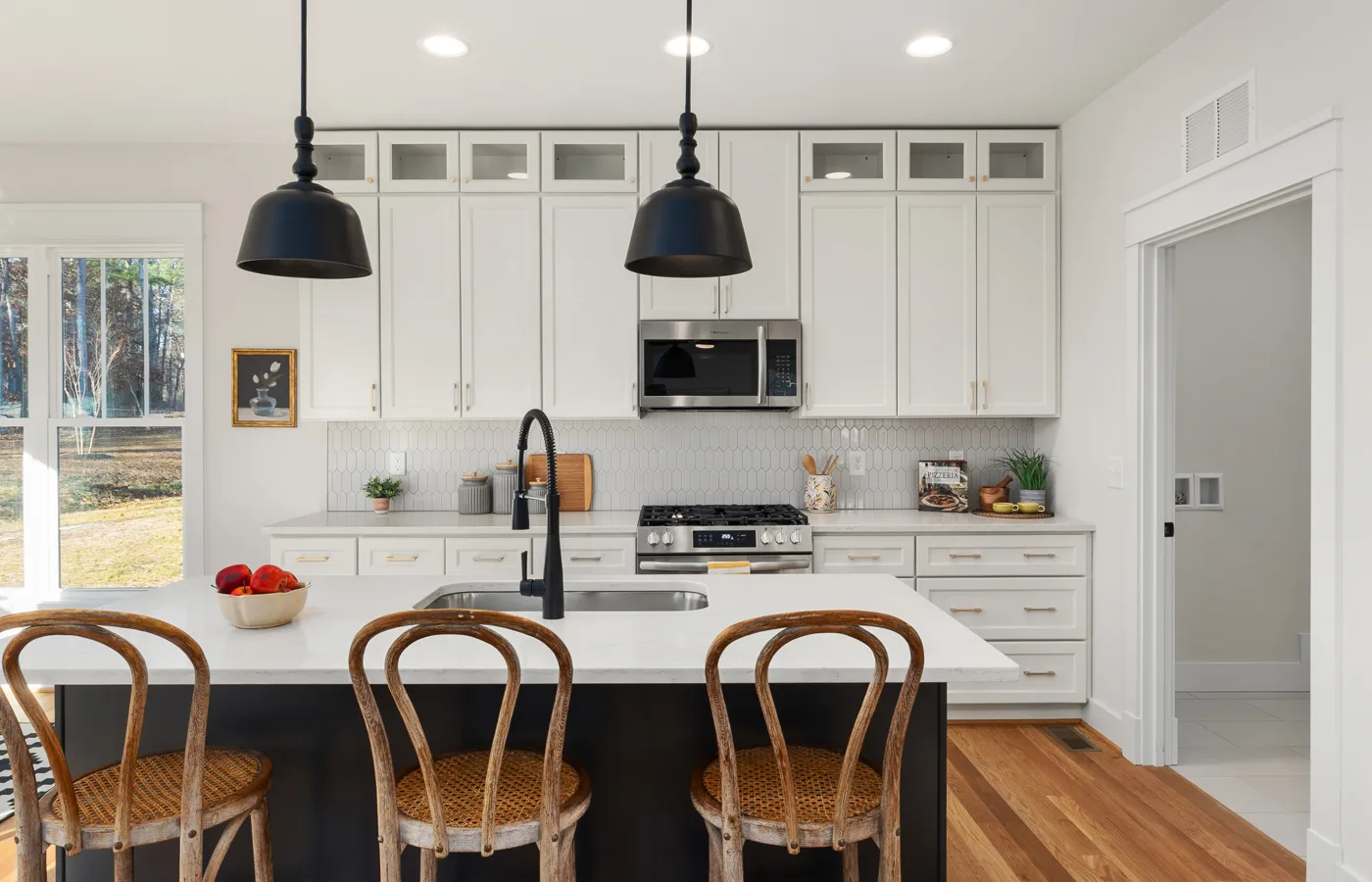
White kitchens benefit from a few edges. Black hardware, dark window frames, a colored island, veined stone or metal lighting can provide enough contrast to make pale surfaces legible. The key is deciding where contrast belongs rather than repeating it everywhere. If every handle, stool, pendant, faucet and accessory is black, the room can become dotted with small high-contrast marks. One or two stronger contrast zones often feel calmer.
Finishing pieces for contrast
Use dark details selectively. These pieces create clear visual anchors rather than scattering black accents across every surface.
Percy 2-Light Pendant - Black and Vintage Brass
Nathan James
The black metal shades establish one concentrated contrast zone above an island or dining surface instead of repeating small dark accents everywhere.
Essa Pull-Down Kitchen Faucet - Matte Black
Delta
A matte-black faucet gives the sink zone a defined edge and works best when it is one of only a few deliberate dark elements.
Exhibit 5-Frame Photo Display - Black
Umbra
A black gallery rail can carry contrast onto an adjacent wall without adding more hard finishes to the cabinetry itself.
Modern Abstract Washable Runner Rug 2 x 6 - Gray
Lahome
A grey abstract runner grounds the floor with a softer dark note, useful when pure black would feel too graphic.
Give a White Kitchen a Colorful Island
A colored island gives a white kitchen a clear center without changing every cabinet. In this room, blue panels sit beneath a pale worktop while the perimeter cabinetry stays white. The contrast is large enough to feel intentional, and the wood floor keeps the palette from feeling cold. Try a muted blue or green when you want a softer effect, or a deeper shade for a stronger focal point. Keep the surrounding finishes restrained so the island remains the main color statement. If you are repainting an existing island, judge a large sample against the floor and worktop before committing.

Define White Cabinets with a Dark Worktop
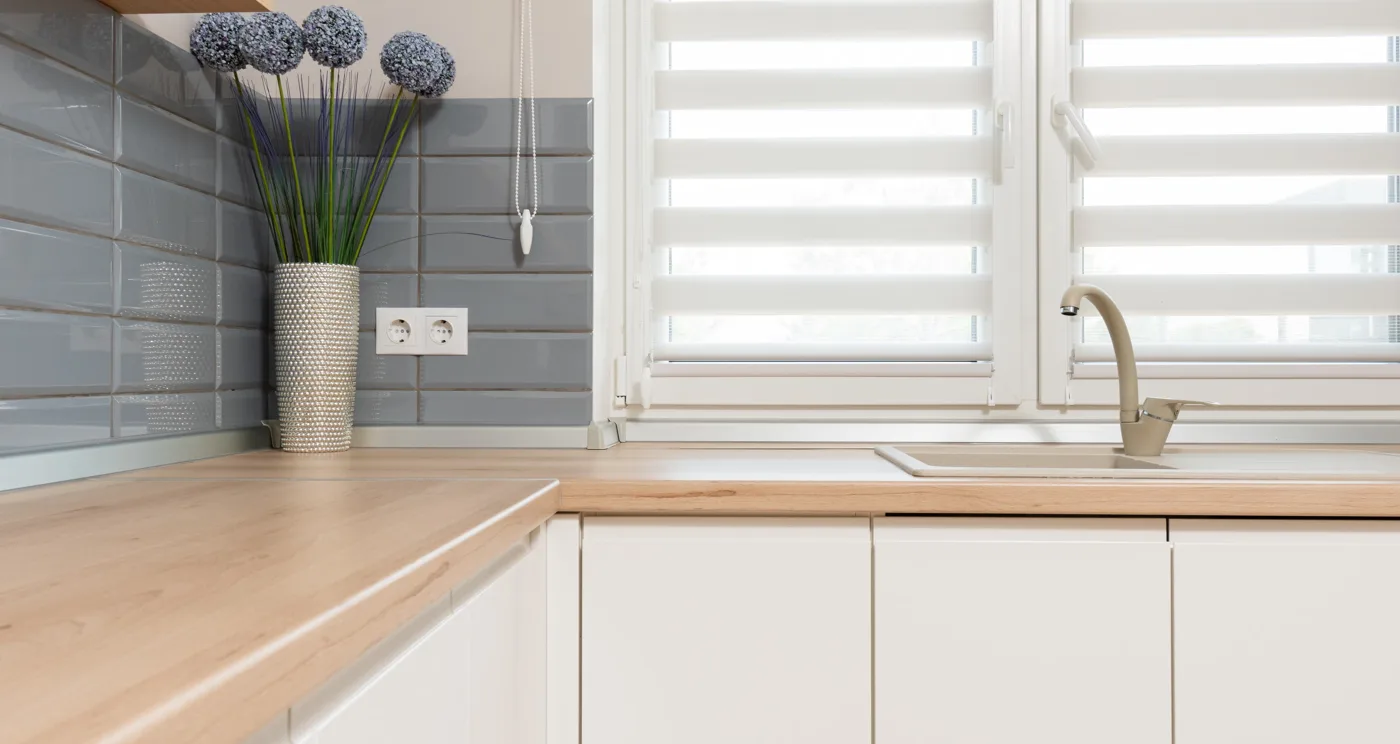
A dark worktop creates a continuous horizontal edge, which has a different effect from scattered black handles or accessories. This kitchen pairs it with white cabinet fronts and white rectangular tiles, so the working surface becomes the strongest line in the room. A simple edge profile keeps the contrast crisp; a thick or heavily patterned slab makes a larger statement. Compare the worktop with the sink and cooktop so their outlines feel deliberate. Dark does not automatically mean low maintenance: water marks, dust and fingerprints can be visible, depending on the material and finish.

Use Lighting to Reveal Texture
White reflects light well, but flat overhead illumination can wash out the very textures that make a pale kitchen interesting. Grazing light across a tiled splashback, under-cabinet task lighting and softer evening lamps create shadow and depth. Warm light can make creamy whites feel inviting, while very cool lamps may shift them toward grey or blue. Consider light temperature and placement as part of the palette rather than a technical afterthought.
Plan for Real Maintenance
White kitchens show some types of dirt quickly, but that visibility is not always a disadvantage—it can make spills easier to spot and clean. More important is the surface finish. Matte doors may hide reflections but show greasy marks differently from satin; pale grout can discolor near cooking zones; porous stone requires different care from quartz. A practical white kitchen is one where the materials suit the household, not one where every surface was chosen for the same visual purity.

Practical pieces worth considering
Functional pieces earn their place here by reducing countertop friction, organizing everyday items or simplifying cleanup.
Rechargeable Sensor Pump 266 mL - White
simplehuman
A touch-free pump keeps the sink area visually clean while reducing the need to handle a soap bottle with wet or messy hands.
Extend Steel Expandable Dish Rack
Joseph Joseph
The expandable format can stay compact most of the time and open up when a larger wash load needs temporary drying space.
Good Grips 5-Piece POP Container Set - White
OXO
Stackable white-lidded containers consolidate pantry staples into a visually quieter system that suits a pale kitchen.
Tower Expandable Countertop Shelf - White
Yamazaki Home
An expandable steel shelf uses vertical space without introducing bulky cabinetry, helping frequently used items stay organized and accessible.